Last Updated :
October 1, 2024
Maithili Rao

Interactive Model of Communication and its role in enhancing business communication

Learn how this interactive communication process boosts engagement between sender and receiver.
team discussing on interactive communication

Have you ever been in a situation where you’ve just wrapped up a presentation and asked, “Any questions?” only to be met with silence? Your heart drops as you wonder if your audience is lost or your presentation is boring. Then, finally, someone speaks up with a question about slide 4. Phew!

The example above shows what happens when communication between the speaker and the audience is poor. The audience's lack of response can make the speaker feel unsure and worried. This shows how communication must go both ways.

Engaging back and forth is crucial for teamwork. Communication is a two-way street. It's not just about speaking; it's also about listening and responding. This interaction is critical in business and helps ensure everyone is on the same page. It encourages active participation and makes the workplace more open to sharing ideas. Good communication clears up any confusion and creates a more responsive environment.

What is the Interactive Model of Communication?

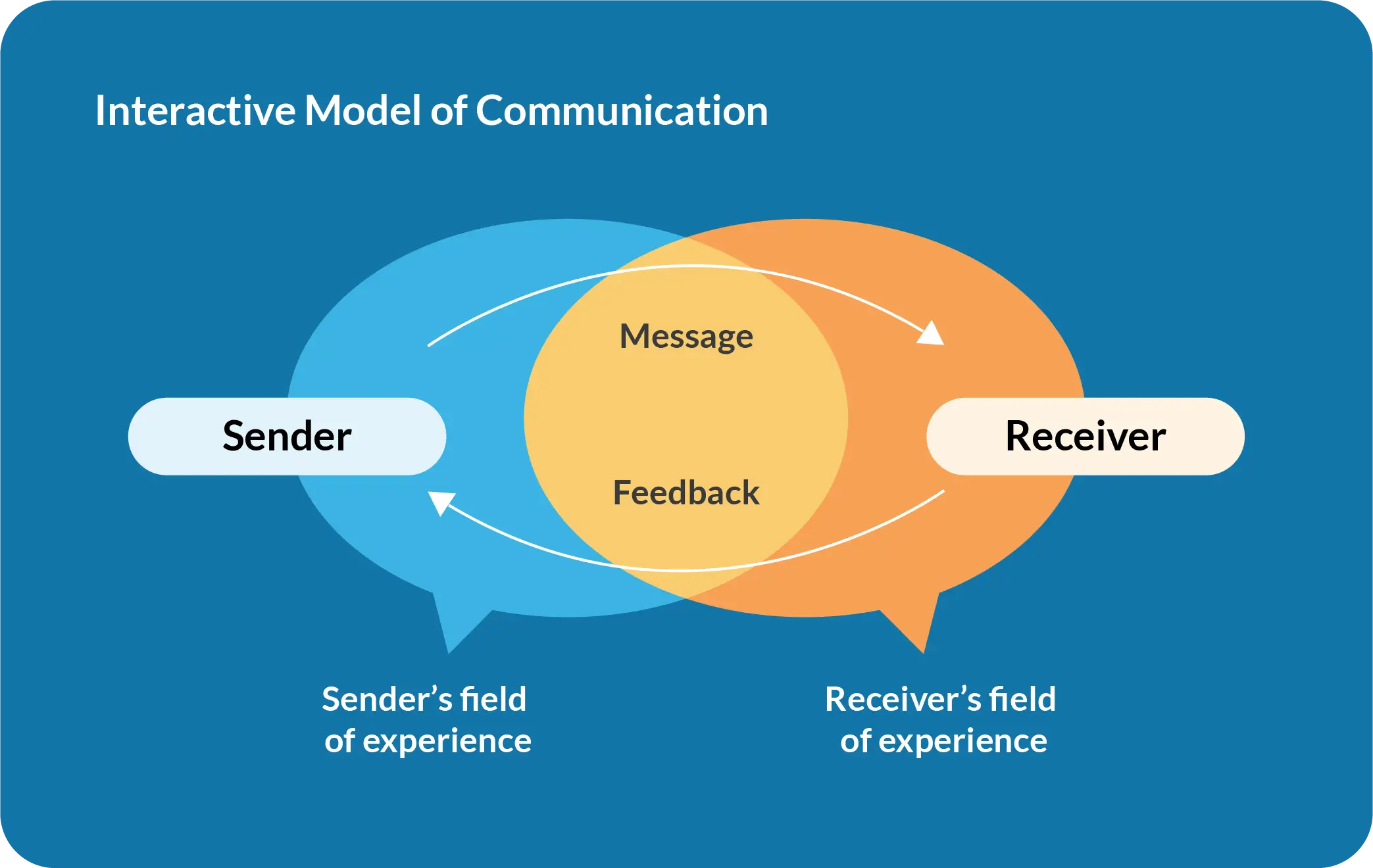
In this model, people take turns sending and receiving messages, shaping the meaning through message exchange and feedback within physical and psychological contexts. It's like a back-and-forth interaction that includes feedback, making communication more engaging and lively.

Interactive model of communication showing sender, receiver, message, feedback, and fields of experience

In communication, it's essential to give and receive feedback. So, when you ask a question and get a response, that's feedback.

This communication model recognizes that many messages are sent simultaneously; some might not be noticed or intended. It's not just about speaking or writing but understanding the communication process. The setting and the way we feel also matter in this communication model.

For example, where we talk and how we feel can influence face-to-face conversations. When we communicate online, our tools also make a difference. Our emotions and stress levels also affect how we understand and convey messages. Feedback and context complete this model, showing the communication process.

Interactive communication can happen with or without spoken words, like when we use machines.

For example, when we use an ATM, we enter information and receive messages from the machine. This communication model includes people and machines talking to each other. It highlights the importance of interaction and feedback and how everyone involved shapes the meaning of the conversation in different situations. It's a detailed and inclusive way of looking at communication.

Interactive Communication Model Explained (2026)

Modern technology has changed how we communicate, creating new ways to engage with each other. Whether browsing the web, interacting with social media posts, or leaving comments, communication is now a two-way street. It's all about people sending messages and getting responses through different channels.

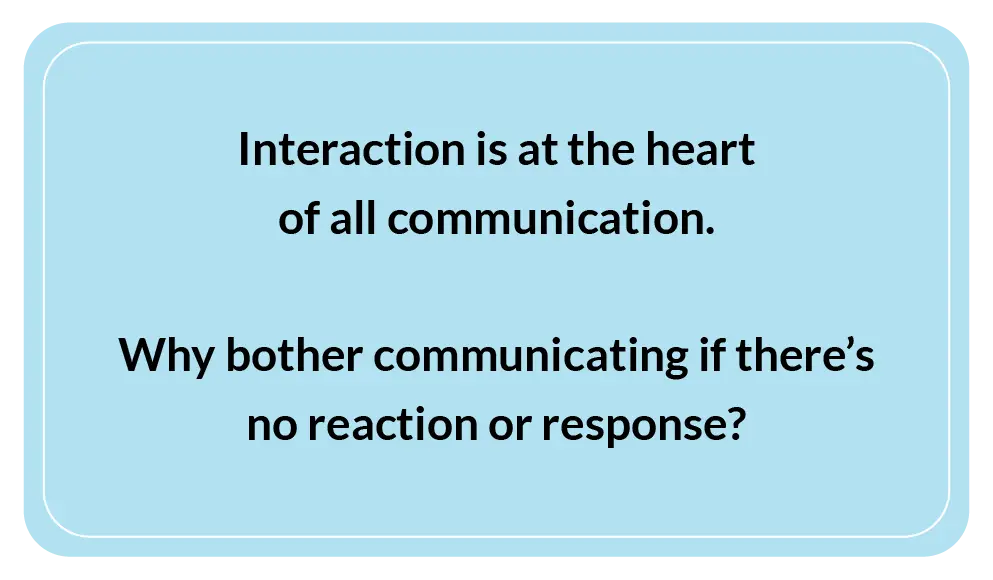
Interaction is at the heart of communication highlighting the importance of feedback and response in communication

So, how do you encourage interaction, especially in today's world overflowing with information?

It's simple—give plenty of chances for engagement. The core of interactive communication is to offer multiple methods for your audience to engage with your message.

Interactive communication goes beyond technology; it involves crafting messages that capture your audience's attention. By capturing their interest and evoking curiosity, you can address the issue of information overload.

Key components of the Interactive Model of Communication

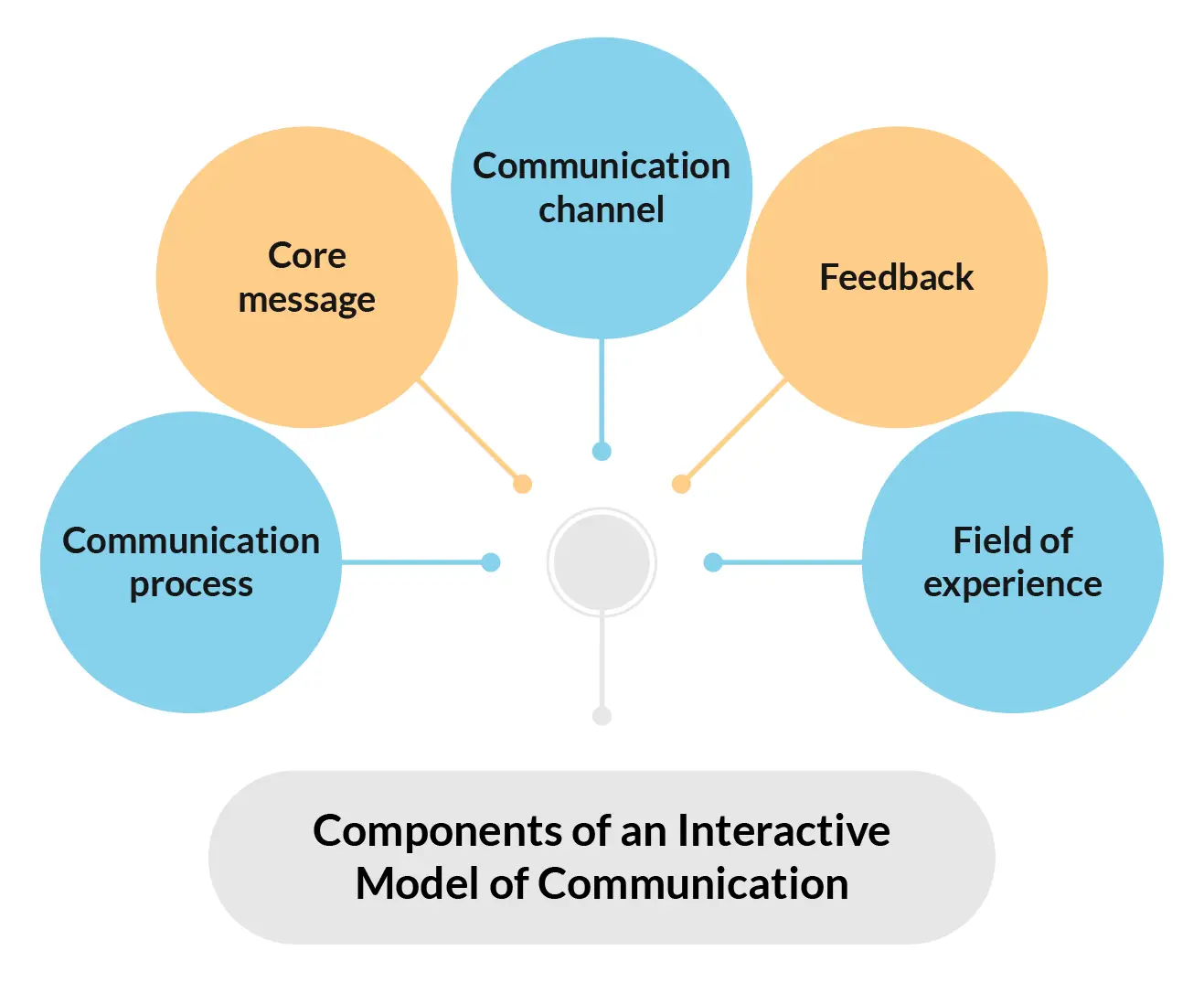
When people communicate with each other, they send and receive messages. This can happen through different channels, like talking in person, on the phone, or through social media platforms. When someone sends a message, they encode it, and the receiver of the message decodes it. After that, they might send a message to a receiver or give feedback, and the process starts again. Here are some of the main components of the interactive model:

Components of interactive communication model including message, communication channel, feedback, and field of experience
  • Communication process: In the Sender-Encoder-Receiver component of the interactive communication model, the communication process involves sending messages from one person to another. The sender creates a message and sends it to the receiver, who interprets it. The receiver also provides feedback, which the sender then responds to. This back-and-forth exchange is how communication happens.
  • Core message: In an interactive experience, the main idea is that a message is the information that gets passed between people. For example, when someone asks a question on a company's social media page, the question and the answer are part of the message. A message is important for ensuring successful communication, no matter how it happens.
  • Communication channel: The communication channel is how people talk to each other and share information. This can happen in many ways, like in person, on the phone, through text messages, or online. For example, when you talk to a customer service person online, that's using a communication channel.
  • Feedback: Feedback is important in any conversation or interaction. It's like when you're having a chat with someone, and you give them a response or reply based on what they said. For example, if a customer asks about a service they got and the company answers their questions, that's feedback. People must actively listen and speak accordingly for good communication, whether about health information or just talking with friends. Feedback keeps the conversation going and ensures everyone understands each other. It's not just about replying to messages—it's about providing exciting and meaningful conversation. Feedback ensures that when people talk to each other, it's a good and compelling conversation.
  • Field of experience: Expertise and background are the knowledge and experiences that shape how someone communicates and how others understand their message. Someone's culture, social habits, and psychology can all impact how they interpret a message. This also affects how people interact, creating a positive and inclusive communication environment.

The interactive communication model is all about dynamic and engaging communication. It's designed to involve everyone and ensure clear and compelling communication. Feedback is vital to this model and works well in all situations.

Main types of Interactive Models of Communication

Even though there are different ways that people communicate with each other, a few main types of communication models are widely recognized. Two common ones are the Osgood-Schramm model and the Westley and Maclean model.

1. The Osgood-Schramm Model

This interactive model of communication views how people communicate with each other. In this two-way process, there are roles as sender and receiver of messages (we always send and receive messages).

This form of communication emphasizes the importance of feedback, which means when we get a response from someone, it helps us adjust our message to ensure we are understood. It also recognizes that the context in which we have a conversation can change how we understand each other.

2. The Westley and Maclean Model

This model of communication views communication as a whole or in a bigger picture. According to this model, communication involves three main parts: when we talk to someone one-on-one, when our messages are sent out through mediums like TV and the internet, and when our larger society and culture influence how we communicate.

This model embraces communication as a constant and repeating cycle, where we give and receive messages and adjust our communication based on what we hear. It considers the physical context, surroundings, culture, and personal traits. This model examines how the media impacts communication by considering the bigger social picture.

Communication plays a major role in business success. When companies use these ways, interactive communication helps employees interact better with each other, reduce confusion, and strengthen their relationships. This can create more value for everyone involved in the organization.

Benefits of using the Interactive Communication Model

When referring to interactive communication, it's all about making personal connections and responding in real time. Many brands consider user choices or personal preferences to create a unique interactive marketing experience for each individual.

One subtle example of the interactive model in our daily lives is the "Netflix Recommendations."

Netflix recommends TV shows and movies you're likely to enjoy based on what you've watched in the past, your ratings, and other things you've done on the app. They make customized lists for each viewer, like "Top picks for you" and "Because you watched X," to help you find stuff you'll love. It's not just about having great content; it's about making sure you find the things you'll like through your preferences.

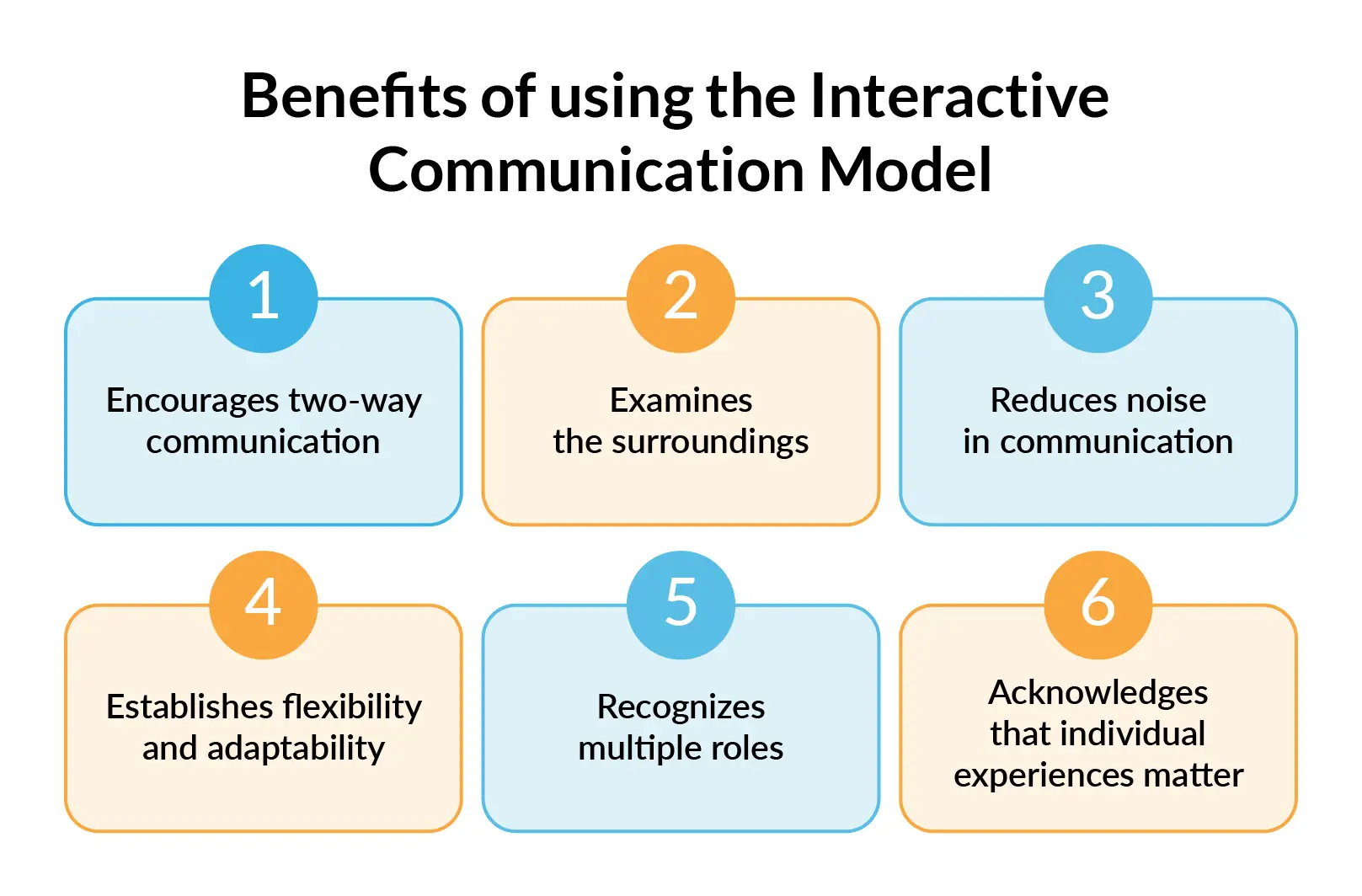
Interactive communication has become super smooth and adaptable thanks to AI and ML. It changes quickly and uses valuable user data to ensure the experience is always on point. Here are 5 advantages of an interactive model of communication:

Benefits of interactive communication model including two-way communication, reduced noise, adaptability, and engagement
  • Encourages two-way communication: This approach promotes a back-and-forth communication process. It favors a two-way dialogue over a traditional setup where one person speaks, and the other just listens (often referred to as a linear communication model).
  • Examines the surroundings: It considers the environment, circumstances, and timing of communication, which can significantly influence the effectiveness of the message delivery.
  • Reduces noise in communication: This approach understands that obstacles or distractions, such as background sounds, can interfere with communication. Noise can adversely influence digital communication. Whether physical or related to a misunderstanding of terms, it can hamper the communication flow, leading to misinterpretations or errors that might skew the original message. Therefore, it's crucial to identify and reduce noise to ensure clear and effective communication within a business setting.
  • Establishes flexibility and adaptability: This approach values getting feedback to change our communication based on how the other person reacts.
  • Recognizes multiple roles: From a business standpoint, this concept involves the understanding that individuals can act as both the messenger and the recipient simultaneously.
  • Acknowledges that individual experiences matter: It recognizes that each person's background and experiences shape how they understand messages.

Interactive communication is excellent when you need sensitive or time-sensitive communication. With real-time exchanges, you always get a clear understanding, whether it's about updating a project or resolving an issue. Interactive communication includes face-to-face meetings, phone calls, and video conferences, where body language and facial expressions are essential.

7 examples of Interactive Communication Model in the workplace

Communication comes in many forms, not just talking and listening. Adopting the interactive communication model has many advantages for businesses in general. It helps processes run smoother, makes them more effective, and improves relationships. Here are some ways businesses use interactive communication within their organizations:

  1. Meetings: Regular meetings with teams, departments, or everyone in the company are important for sharing updates, talking about plans, and addressing any issues. This kind of communication lets everyone give feedback immediately and work together to solve problems.
  2. Emails: Emails are essential in businesses for sending formal messages, updating teams on projects, and collaborating with different groups inside and outside the company. Emails can help enhance communication effectiveness across the organization.
  3. Reports and presentations: Interactive communication can also involve creating thorough and effective reports. These can be used to share research findings, performance outcomes, or business predictions with the right people, helping them make decisions.
  4. Video conferences: Video/online meetings are vital for working from different locations, especially if businesses follow a remote work policy or hybrid-work model. They allow employees to see and talk to each other, whether in the same room or different geographies, helping keep everyone connected and working smoothly.
  5. Notice boards and intranet posts: Physical or digital notice boards and company websites are used to share important information with everyone in the organization. This could include important news, updates to company rules, or celebrations of employees' successes.
  6. One-on-one check-ins: Managers and team leaders regularly talk with their team members to give them individual feedback, discuss how they can grow in their careers, and help with any personal or work-related issues. This helps ensure employees feel cared for and their work is appreciated.
  7. Feedback surveys: Many companies use surveys to collect employee feedback about how they feel about their jobs, the work environment, and company rules. This is a beneficial form of two-way communication to understand how employees feel. It also enables management to find ways to improve internal processes.

These communication methods serve distinct purposes, from facilitating immediate action to fostering long-term engagement and feedback. Successful businesses view communication as a powerful tool to enhance their organization's productivity and efficiency by addressing the diverse communication needs of employees.

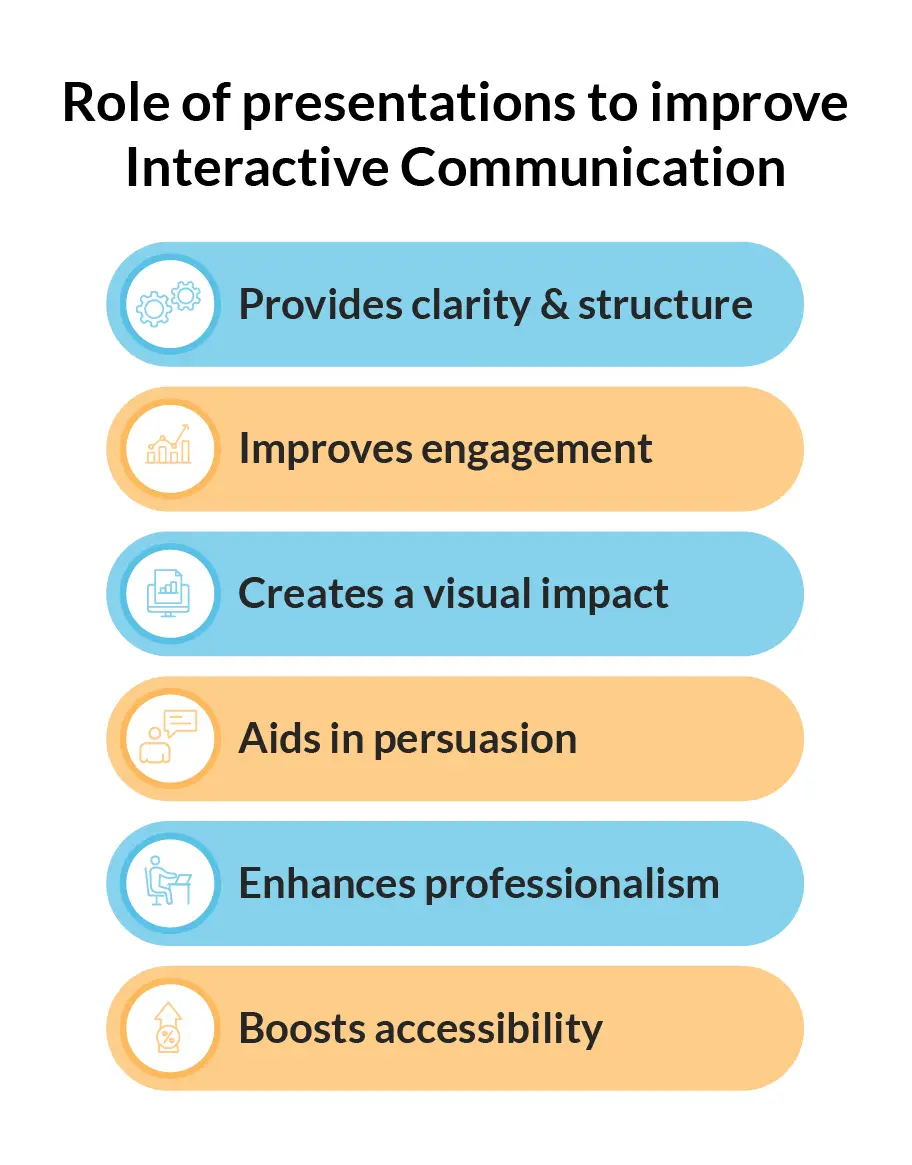
Why are presentations important for Interactive Communication?

Presentations help break complex information into smaller, easier-to-understand parts to enable people to understand your message better. Presentations are also a great way to persuade people and share your ideas effectively. Nowadays, digital tools make it much easier to reach people using presentations. Presentations are crucial in interactive communication for several reasons:

  1. Provides clarity and structure: Presentations are great because they help make complicated information easier to understand. By organizing information in a logical way, people can follow along better and remember more of what they learn.
  2. Improves engagement: Q&A sessions, live polls, and videos can help keep people interested and make communication more effective. Interacting with the audience this way can provide immediate feedback and make communication more dynamic and flexible.
  3. Creates a visual impact: Using pictures, charts, and videos in presentations can help people understand and remember information better. Visual aids can make a big difference in how well the audience remembers the message you're trying to convey.
  4. Aids in persuasion: Presentations are a great way to convince and persuade people, especially in business, education, and advocacy. By using facts, stories, and pictures, presentations can better influence and motivate people to take action than just talking or writing.
  5. Enhances professionalism: Being professional means being well-prepared when presenting. This shows that you take the topic seriously and respect your audience's time. When you're well-prepared, you come across as more knowledgeable and trustworthy, which helps build a good connection with your audience.
  6. Boosts accessibility: Different digital channels and platforms help design presentations to meet the needs of diverse audiences. Digital tools also make it easy to share presentations with people who are not in the same place, reaching a wider audience.
Role of presentations in improving communication including clarity, engagement, visual impact, persuasion, and professionalism

Presentations are essential for communicating clearly and engagingly. They help people understand information better, keep them interested, encourage organization, communicate with visually appealing slides, and much more. So, presentations are essential for getting your message across in a fun and engaging way!

How can Prezent support your team with enhancing the Interactive Communication process?

Interactive communication is essential in everyday life, both personally and professionally. Prezent assists professionals in making impactful presentations and refining communication skills so you can spend more time improving how you and your team communicate at work. Here are some of the features of Prezent you can use:

  • Slide Library: The tool has over 35,000 professionally designed, on-brand slides. You can easily customize these templates with your information, saving time and effort.
  • Story Builder: This tool can help you create a compelling and easy-to-follow story for your communication plan. This will ensure that your message is well-structured and transparent, making it more successful in getting your point across to the people you need to reach.
  • Best Practice Library: Contains high-quality presentation templates from all over the world without additional charges. You can access and use these top-tier templates without paying extra charges.
  • Communication Fingerprints: A well-prepared presentation can boost your confidence and help you focus on getting your message across. Plus, the communication fingerprints feature can give you valuable insights into what your audience likes and expects so you can customize your content and communication to better connect with them.
  • Courses: Prezent provides different training exercises and feedback to help improve communication in different jobs. Whether you work in sales, strategy, or operations, these exercises are designed to help you communicate better in various situations.
  • Zenith Learning Workshops: These can help improve your business communication skills! Led by industry experts, these workshops are designed for all skill levels and interests. You'll participate in engaging live sessions, access valuable materials, and receive ongoing support to help you keep learning.

Effective communication is vital in the workplace. Interactive communication involves giving and receiving feedback, tailoring your message to the recipient, encouraging questions, and engaging in dialogue. It is crucial to listen attentively, adapt your communication style to your audience, and think on your feet. Using interactive content like presentations, videos, and infographics is essential to promote communication as a two-way process, with feedback playing a significant role.

Prezent is more than just a presentation tool. It's designed with interactive elements to help improve information exchange across your organization. The team behind Prezent is committed to supporting your communication goals. You can try it for 14 days for free or request a detailed demo from our experts at your convenience!

Ready to create impactful presentations?

Try for free

About the author

Picture of Bharti Jain

Bharti Jain

Bharti is a product marketing writer at Prezent who believes great writing starts with deep reading. She began her career in finance, switched paths in 2019, and has since worked with Kintegra, Clearout, Miko, CaratLane, and, of course, Prezent. From content marketing to product marketing, she enjoys simplifying complex product and technical ideas without losing meaning. As she always says, “If it needs explaining twice, it needs better writing.”

Connect with her on LinkedIn.

No items found.
No items found.

Related resources

BLOG
Supriya Sarkar
May 18, 2026
Evidence communication: Strategies and frameworks for clear scientific communication
Discover practical evidence communication strategies for presenting scientific research clearly and supporting informed healthcare decisions.
BLOG
Niyati Mahale
May 18, 2026
Medical storytelling: How to communicate complex healthcare information more effectively
Learn how medical storytelling improves healthcare communication, patient understanding, scientific clarity, and audience engagement across teams.
BLOG
Niyati Mahale
May 18, 2026
Pharma communications strategies to improve cross-functional collaboration
In this guide, we’ll explain pharma communications strategies that improve scientific clarity, cross-functional collaboration, and communication workflows.
BLOG
Niyati Mahale
May 18, 2026
AI in drug development: How AI is transforming the pharma industry
In this guide, learn how AI in drug development is transforming drug discovery, clinical trials, pharmacovigilance, and pharmaceutical research workflows.
BLOG
Supriya Sarkar
May 18, 2026
Clinical data storytelling: Turn healthcare data into actionable narratives
Explore how clinical data storytelling helps healthcare teams communicate complex clinical evidence through compelling narratives, effective visualization, and actionable data-driven insights.
BLOG
Niyati Mahale
May 18, 2026
HCP engagement: What it is, why it matters, and how to build a strategy that works
In this guide, learn how to build effective HCP engagement strategies using omnichannel communication, scientific exchange, and personalized outreach.
BLOG
Niyati Mahale
May 14, 2026
Regulatory affairs presentation: how to create one for different audiences
In this guide, we’ll explain how to create regulatory affairs presentations for different audiences including health authorities and cross-functional teams.
BLOG
Niyati Mahale
May 14, 2026
Scientific data presentation: best practices for clear and credible communication
Learn scientific data presentation best practices, including storytelling, charts, and strategies and also learn how to present scientific data effectively.
BLOG
Supriya Sarkar
May 14, 2026
AI in biopharma: Solving the communication gap across research, medical, and commercial teams
Discover how AI in biopharma is helping teams turn complex clinical data into clear, compliant presentations faster. Explore benefits, use cases, pitfalls, and best practices for life sciences organizations.
BLOG
Niyati Mahale
May 13, 2026
Congress preparation: a step-by-step guide for life sciences teams
Learn congress preparation strategies, best practices, and workflows to help life sciences teams plan compliant and well-coordinated medical congresses.
BLOG
Supriya Sarkar
May 11, 2026
How to manage clinical trial data: Key steps and best practices in clinical data management
Learn how to manage clinical trial data with clinical data management best practices, CDISC standards, AI, database lock preparation, and data quality strategies.
BLOG
Niyati Mahale
May 11, 2026
Biopharma presentations: types, examples, and best practices for life sciences teams
A complete guide to biopharma presentations, including biopharma presentation types, best practices, and how to create one with scientific storytelling.
Free 14-Day Trial*

Customized On-Boarding*