No items found.
No items found.

Communication is seen as the basis for all human interaction. Communication theory is essential in helping us understand how we interact with each other in today’s world. It examines how people and groups share messages and shape their experiences, showing that communication is important in our social lives, cultural identities, and workplaces.
This field teaches us about effective communication—whether in everyday chats or how media influences the public's thoughts. As technology changes quickly, knowing the basics of communication can help us connect with others, persuade them, and inspire them, ultimately leading to stronger relationships. Let’s dive in!
Communication theory examines how we convey and interpret information. By breaking down this complex process of communication, you can gain essential insights into its components and how meaning is shaped among individuals. This understanding is essential in diverse businesses ranging from digital media to PR fields. Communication theory equips us with valuable tools to connect, persuade, and work together more efficiently.
The importance of communication cannot be understated. Communication theory is crucial in enhancing professional interactions, streamlining processes, and improving workplace efficiency. When people learn different ways to share information, employees and managers can discuss complicated ideas more clearly. This helps everyone adjust their messages for other listeners, which can cut down on confusion. As a result, teams collaborate better, make smarter decisions, and resolve conflicts more effectively.
Communication is dynamic, and individuals can perceive the same message in many ways. Several communication models have been proposed to understand the concept of communication, ranging from linear to more complex, interactive processes. Explore the three primary communication models below:
The linear model, often called the transmission model, is the simplest form of communication. It views communication as a one-way process where the sender transmits a message to a passive receiver (sender to a receiver). This model doesn’t account for feedback or interaction and assumes the communication is straightforward and without interference.
Example: A radio broadcast where the speaker shares information without receiving immediate responses from listeners.
In the interactional model, communication is a two-way process, incorporating feedback from the receiver. This feedback loop is essential for ensuring understanding and fostering dialogue. The sender and receiver alternate roles, making communication more dynamic and reciprocal.
Example: A job interview where the interviewer and interviewee ask questions and respond.
The transactional model sees communication as a simultaneous process in which both the sender and receiver send and receive messages simultaneously. This model accounts for both parties' context, relationship, and individual experiences.
Example: A brainstorming session in a team meeting, where participants continuously exchange ideas and build on each other’s thoughts.
Communication has changed a lot over time. In the early days, people considered it a simple process where one person sends a message to another (sender to receiver). This straightforward idea missed many important aspects of how people interact and the social systems around them.
In contrast, contemporary theories have shifted towards a more refined perspective, recognizing communication as a transactional process. Instead of seeing it as just a one-way street, it is seen as a two-step flow. This means that both people involved actively participate and share messages back and forth.
It acknowledges that communication is not merely about the flow of information but also involves feedback, context, and the influence of social and cultural factors. This modern view shows that communication is a lively and interactive experience that helps build relationships and connect more deeply.
Communication takes place in various forms in the workplace. Beyond the various models, there are many theories available for reference. Explore the common theories based on which the modern workplace communication works:
The cybernetic theory revolves around feedback loops and message clarity, which are essential in collaborative settings. In a work environment, it helps teams refine processes, detect issues early, and promote continuous improvement through structured feedback channels.
Example: In agile teams, sprint retrospectives use feedback loops to improve processes after each cycle. Team members adjust approaches by analyzing performance data and peer feedback, enhancing productivity and alignment.
Socio-cultural theory emphasizes that language and shared cultural values impact how individuals interact. This theory is crucial for fostering cross-functional or cross-cultural communication in workplaces. This theory addresses how individuals interpret messages based on cultural or team-specific norms.
Example: In multinational organizations, cultural sensitivity training applies socio-cultural principles, helping employees understand and respect diverse communication styles, which facilitates better teamwork and reduces miscommunication.
Social exchange theory highlights reciprocity and relationships, which are foundational in maintaining positive team dynamics and trust. Work environments can leverage this theory to encourage supportive and reciprocal relationships, ultimately improving morale and retention.
Example: Employee mentorship programs embody social exchange theory. Experienced employees offer guidance in these programs, and mentees bring fresh perspectives in return. This exchange builds a culture of support, enhances job satisfaction, and strengthens team bonds.
Diverse theories from varied schools of thought have been developed since ancient times. Some theories are social cognitive theory, cognitive dissonance theory, cultivation theory, theory of reasoned action, theory of planned behavior, and many more. There are some theories that are a mix and people need to understand how these may apply in their professional lives. It is very important to understand which communication practices or communication studies are applicable in the modern workspace.
Modern communication settings are fundamental in shaping workplace interactions. These settings are important for creating tailored, efficient communication channels that support workplace productivity, engagement, and broader audience reach. Here's an overview:
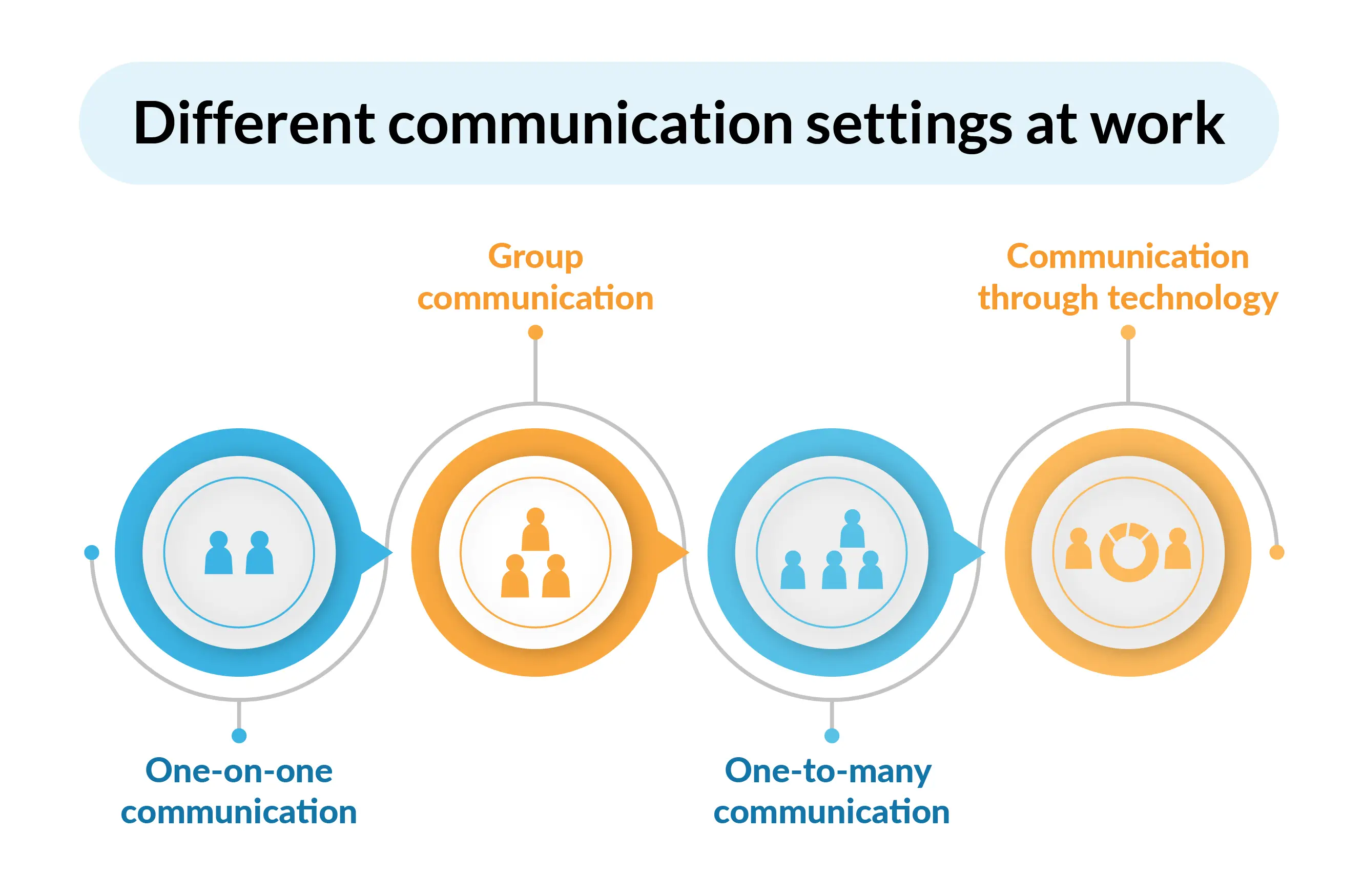
While there are many categories across various industries, we will focus on digital media and PR categories. Understanding the relationship between theories and the communication settings in this segment can enable individuals to use this knowledge across other domains as they see fit. Here are some of the main categories, theories, and settings respectively in this space:
🔔Key takeaway: Leverage feedback loops to continuously refine campaigns based on real-time audience interaction, ensuring relevancy and engagement.
🔔Key takeaway: Build reciprocal relationships with influencers, utilizing technology to track performance and optimize collaboration for mutual benefit.
🔔Key takeaway: Continuously improve content strategy by analyzing audience engagement, ensuring content remains valuable and relevant.
🔔Key takeaway: Tailor PR messaging culturally to connect with audiences, using technology to manage campaigns and track real-time impact.
🔔Key takeaway: Optimize strategies using performance data from ads and search rankings, ensuring targeted, efficient communication.
🔔Key takeaway: Foster strong relationships with journalists through reciprocal exchanges, utilizing technology to streamline media and audience outreach, as well as coverage management.
Communication plays a major role in how we function and perform on our work front. It also aids in structuring their messages effectively when delivering presentations, ensuring clarity, relevance, and engagement. By tailoring the message to the audience and context, it becomes easier to achieve the intended goal—whether it is persuasive communication, informational communication, or inspirational content for the audience.
Mastering various theories is a powerful way to enhance organizational efficiency. Here are some tips on how you can enhance communication effectiveness and pro-tips with Prezent to take your communication strategy to the next level:
Understanding your audience is the basis of effective communication. The theories we discussed in this article emphasize the importance of knowing who you are speaking to. This understanding allows you to adapt your message and style to resonate better. You can impact your audience by tailoring your message to their knowledge, interests, and concerns. When addressing a diverse group, break down complex ideas while preserving their essence.
⚡Pro-tip with Prezent: Leverage Prezent's Communication Fingerprint feature to design presentations that resonate with your audience’s preferences. By identifying your target audience—whether executives or technical staff—you can quickly create slides that meet their needs.
Eliminating distractions and preventing misunderstandings is essential to ensuring your message shines through clearly. The clearer your message, the more effectively it will be comprehended.
⚡Pro-tip with Prezent: Prezent’s AI-driven features will help you reduce visual clutter and enhance message clarity. This will make your presentation focused and incredibly easy for your audience to grasp.
Nonverbal communication, such as eye contact, tone, and body language, is crucial in how your messages are perceived, especially in face-to-face or video interactions. Ensure your gestures, facial expressions, and tone align with your message. Use visuals effectively to reinforce key points.
⚡Pro tip with Prezent: Utilizing Prezent’s visual Story Builder feature enhances your verbal messaging. Engaging visuals and impactful infographics can reinforce your key points, making your presentations informative and memorable.
Engaging in two-way communication fosters understanding. Feedback from the audience helps the speaker adjust the message for better comprehension. Actively seek feedback to ensure your message is received as intended, and be prepared to make any necessary adjustments.
⚡Pro tip with Prezent: The Prezentation Library feature allows teams to give real-time feedback on presentations, streamlining revisions and ensuring the final result exceeds everyone's expectations.
Communication theory provides a valuable framework for understanding interpersonal relationships, influence, and relationship building. Applying these principles makes your communication more impactful and meaningful—whether leading a team, delivering an engaging speech, or connecting with clients. By mastering essential communication processes, you can significantly enhance your ability to convey ideas and forge strong relationships while achieving your goals across various contexts.
Prezent’s innovative design features simplify complex information using clean layouts and helpful visual aids. This platform effectively reduces distractions by steering users toward the optimal message format, ensuring that crucial points are presented clearly.
Furthermore, Prezent enables businesses to practically implement relevant theories by streamlining message creation and promoting collaboration, resulting in presentations that are not only distinct but also precisely tailored to the audience. By leveraging Prezent, organizations can elevate internal and external communication, ultimately leading to more successful business operations.
The nature of communication has been constantly evolving. Prezent is designed to help enhance the field of communication and make it more engaging in different situations. It's a valuable tool for anyone looking to communicate effectively. You can explore what Prezent offers by scheduling a demo or trying out a free trial to see how the platform works.




.png)