No items found.
No items found.

Hey there, fellow business enthusiasts!
If you're reading this, you're probably no stranger to the term "business case." In fact, you might be here because you're keen to unravel the art of crafting an impressive business case presentation. Well, you're in the right place!
In this comprehensive guide, we're diving deep into the world of business cases, exploring why they're crucial, when to create one, and how to structure an effective business case presentation. Plus, we'll sprinkle in some do's and don'ts to ensure your presentation shines.
So, buckle up, because by the end of this journey, you'll be equipped with the skills to create a business case presentation that wows your stakeholders, just like a pro. Ready? Let's dive in!
First things first, let's clarify what exactly we mean by a business case. It's more than just a buzzword; it's a powerful tool that helps organizations make informed decisions.
At its core, a business case is a document that outlines the rationale for initiating a project or making a significant business-related decision. It's like the blueprint for your business move, offering a structured way to assess the potential risks, benefits, and costs involved.
But here's the kicker: A well-crafted business case isn't just about numbers and graphs; it's a persuasive narrative that tells a compelling story about why your idea is worth pursuing. It's your secret weapon to gain buy-in from key decision-makers.
Now that you know what a business case is, you might be wondering why you need one. Well, here's the deal:
Clarity and focus: A business case forces you to articulate your idea clearly and concisely. It's like putting your thoughts through a refining process, leaving you with a crystal-clear vision.
Risk mitigation: Projects or decisions without a solid business case are like ships without navigation. It helps you identify potential pitfalls and navigate around them.
Resource allocation: Limited resources demand wise allocation. A business case helps you justify why your project deserves those resources.
Stakeholder buy-in: Ever tried convincing your team or investors without data? A business case equips you with the data-driven argument you need to win them over.
Alright, you're convinced of the importance of a business case. But when should you whip out your presentation skills? Here are some scenarios:

Creating a business case presentation can be a daunting task, but fear not, we're breaking it down into manageable chunks. Here's a step-by-step guide:
Executive summary: Begin with an attention-grabbing summary. In just a few slides, give an overview of what your business case entails.
Problem statement: Clearly define the problem your business case addresses. Use real-world data to illustrate its significance.
Business objectives: Lay out your objectives and what you aim to achieve with this project.
Project plan: Detail the plan of action, including timelines, milestones, and resources required.
Key stakeholders: Identify the key players involved and their roles in the project.
Facts and figures: Support your case with concrete data. This is where those business case studies come in handy.
Solutions to the problem: Present your proposed solutions and explain why they're the best way forward.
Align with company goals: Show how your business case aligns with the broader goals of your organization.
Cost-benefit analysis: Break down the costs and potential benefits. Be transparent and realistic.
Conclusion: Summarize your business case and reiterate why it's a solid proposition.
Remember, clarity and structure are key. Use a business case presentation template to keep things organized and professional.
Before we dive deeper, let's lay down some ground rules to ensure your business case presentation shines:
By now, you've learned the essentials of crafting a persuasive business case presentation that combines data and storytelling to justify significant projects or decisions. They're crucial for clarity, risk mitigation, resource allocation, and gaining support for endeavors like product launches or process changes.
To create an effective business case presentation, follow a structured approach, including problem definition, objectives, plans, stakeholder involvement, data support, proposed solutions, alignment with company goals, and cost-benefit analysis. Remember to tailor your presentation to the audience, use visuals, and address objections while avoiding information overload and rushing through it. Proofreading ensures clarity and coherence. These steps will help you create a compelling business case presentation.
Utilizing a business case framework offers numerous advantages. It provides you with a solid foundation for your presentation, guaranteeing that you seamlessly address all critical elements. Moreover, it frees up valuable time, enabling you to concentrate on content rather than becoming entangled in formatting intricacies. Consider it your reliable companion for effortlessly crafting a compelling PowerPoint business case.
To write a business case that truly resonates with stakeholders, it's vital to understand their needs and concerns. Start by identifying the key decision-makers and their expectations. Then, craft your business case in a way that addresses their concerns. Remember, it's not just about presenting facts; it's about presenting a compelling narrative that speaks to the business problem at hand.
Absolutely! When you're preparing to present your business case, consider these tips for success:
Creating an engaging business case powerpoint is an art. Start with a captivating opening that hooks your audience. Use the slides to complement your narrative, not replace it. Remember, your ppt slides are there to support your story, not overwhelm it. Keep the design clean and consistent with your business case powerpoint template.
While there's no hard-and-fast rule, a complete business case presentation should be concise but thorough. Aim for clarity rather than length. However, avoid the temptation to have too many slides – nobody wants to sit through 100 slides. Focus on presenting a strong case with the most important information. Your business case should be as long as it needs to be to make a convincing argument, but no longer.
Remember, the goal of your business case presentation is to convince others of your proposal, and using a well-structured business case template and adhering to the principles of an effective presentation will significantly increase your chances of success.
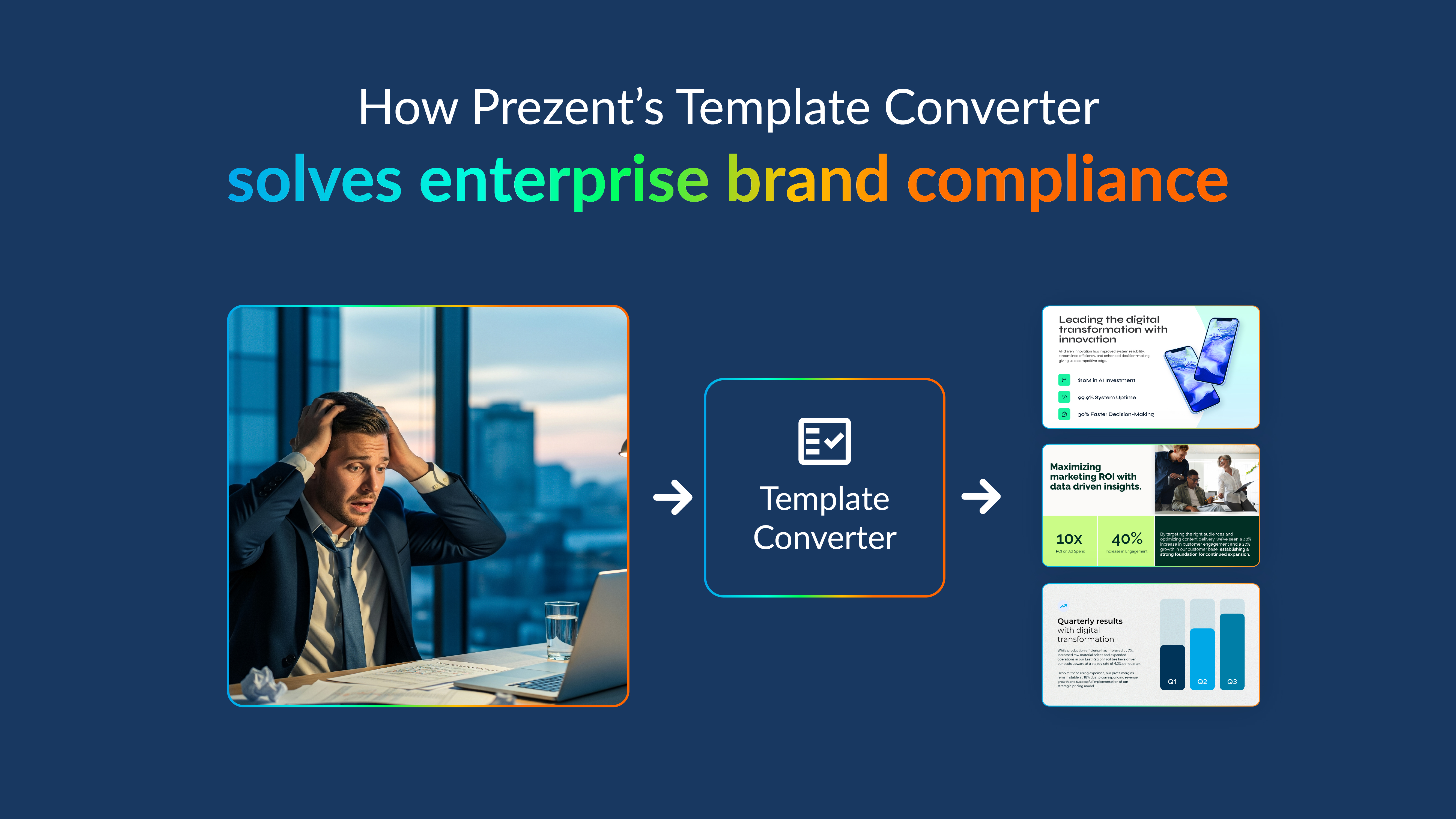
Imagine having a tool that not only helps you save time but also ensures your business case presentation is 100% on brand and compliant. With Prezent's real-time sharing and collaboration features, you can work seamlessly with your team to crush communication costs and deliver top-notch presentations.
So, why wait? The world of effective business presentations is at your fingertips. Get started with Prezent and elevate your presentation game today!

Are you ready to ignite your business case presentations? Try our free trial or book a demo today with Prezent!