Last Updated :
October 11, 2022
Jessica Cara

5 best practices from Roger Federer's retirement speech

Federer retires holding 20 Grand Slam titles and more than 100 tournament wins worldwide.‍
roger federer's footprint

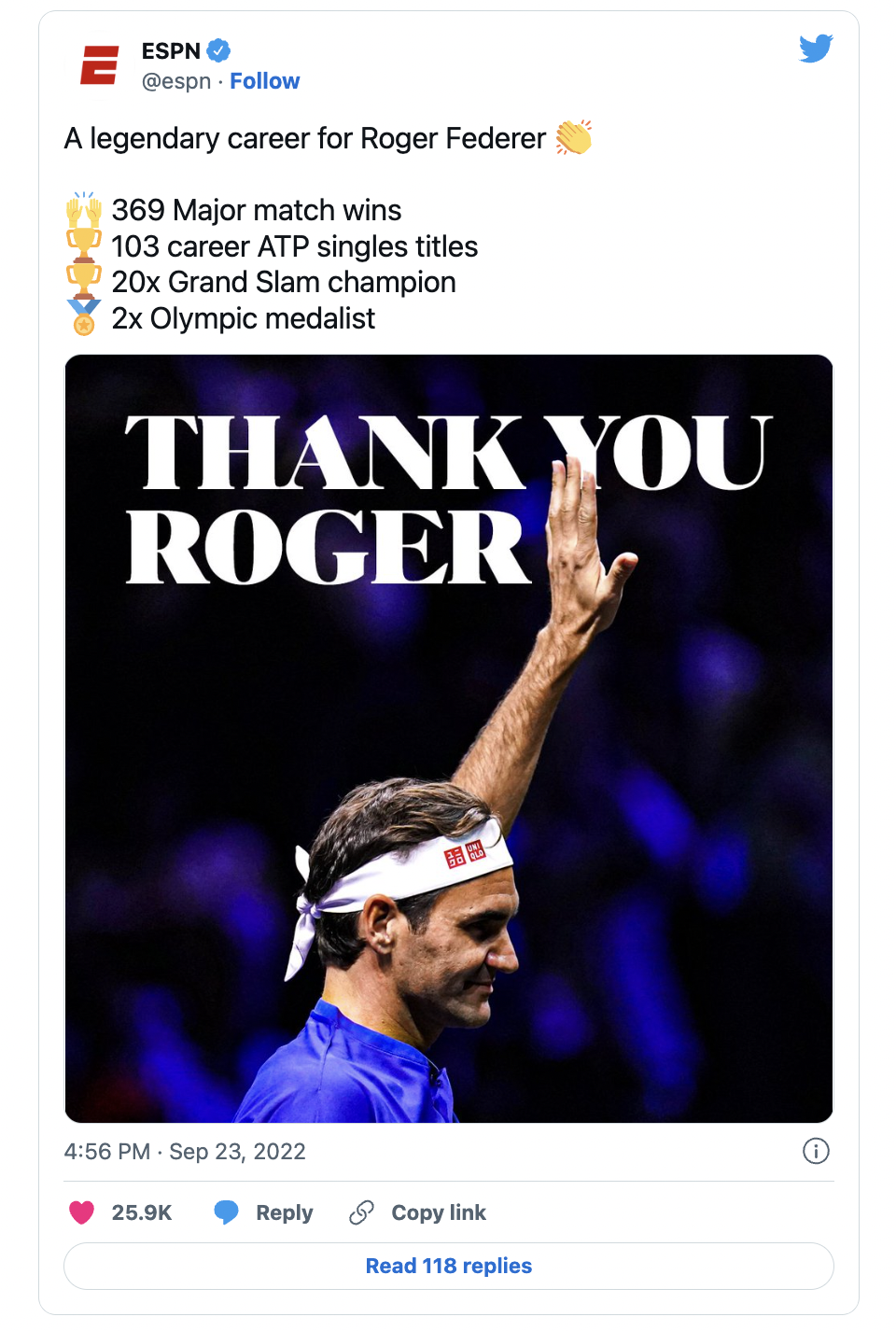
This past September, tennis legend Roger Federer retired from the sport after 24 years on the ATP Tour—the worldwide top-tier tennis tour for men. He retires holding 20 Grand Slam titles and more than 100 tournament wins worldwide.

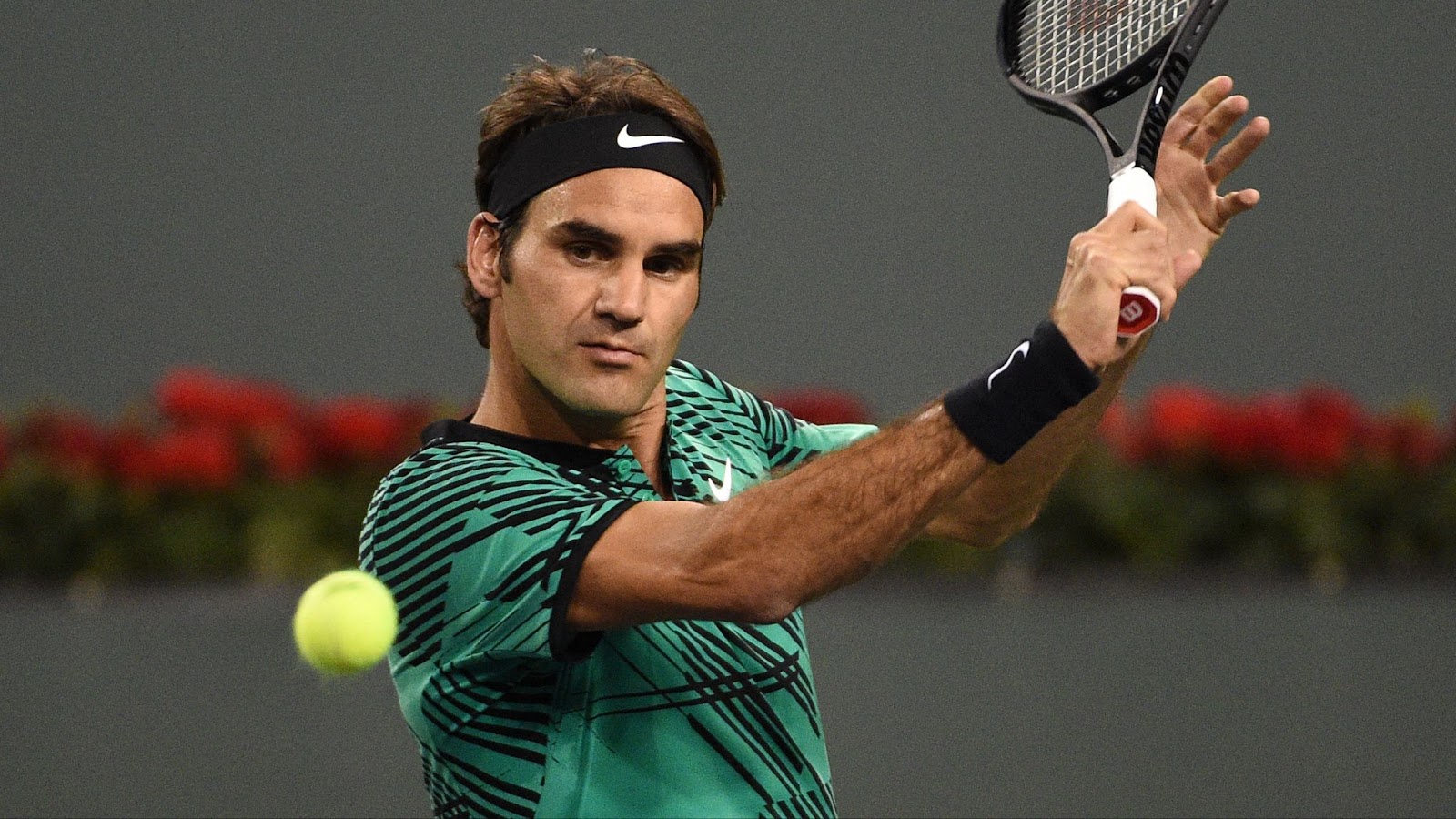
Roger Federer demonstrating focus and precision, illustrating presentation skills and composure under pressure
Image source

Before he played his final match at the 2022 Laver Cup, Federer announced his bittersweet retirement in a video shared online.

View a transcript of Federer’s statement here.

All momentous careers must eventually come to an end, and one day you may find yourself having to prepare a retirement speech.

Until then, here are 5 key takeaways from Federer’s swan song proclamation that can be universally used to captivate your audience as you speak.

Involve the audience early

A surefire way to grasp your audience’s attention is to engage them immediately. Federer does just that in his opening by addressing his audience directly:

“Of all the gifts that tennis has given me over the years, the greatest, without a doubt, has been the people I've met along the way: my friends, my competitors, and most of all the fans who give the sport its life. Today, I want to share some news with all of you.

Pace yourself

Your pace—how quickly you speak—can be adjusted to add emphasis to certain parts of your speech. As Federer reads his statement, he uses a steady, even pace to deliver his message. At this speed, we (the audience) can not only understand Federer clearly, but we can also hear and feel the emotion in his voice on having to step away after such an illustrious career.

Segment the audience

A powerful strategy great orators use to better connect with listeners is to segment their audience. Instead of speaking to a faceless mass, use this technique to personalize portions of your speech so they resonate with different portions of your audience.

In Federer’s speech, he segments his audience into the following:

  • His wife and children
  • His parents, sister, and coaches
  • Swiss Tennis and his teammates
  • His manager for the past 17 years
  • His competitors
  • His fans

And to conclude his speech with a complete and bittersweet end, Federer addresses one final segment—the sport of tennis. 🎾

“Finally, to the game of tennis: I love you and will never leave you.”

Power of the pause

A pause can be useful in your speech to help add emphasis or indicate clear transitions. Throughout Federer’s speech, his use of brief pauses act as natural transitions we can pick up easily and help set the pace and tone of the message.

The audience is the hero

A captivating speech will speak to your audience and include them, and Federer did just that with his retirement speech. His announcement could have been a brief message where he could have simply talked about himself and his accomplishments.

But that wouldn’t have been the Roger Federer we’ve all come to know and love.

In true Federer fashion, he used his announcement to express heartfelt gratitude for everyone—including millions of fans—who have supported him throughout his entire career. Even in his departure, Federer’s humble and kind-hearted nature shines through.

Visual storytelling in presentations using achievements and data to reinforce credibility and audience impact
Game, set, match! Take these tips to supercharge your next speech. Want to power up your next presentation? Sign up for our free trial or book a demo today!

Ready to create impactful presentations?

Try for free

About the author

Picture of Abdulla Basha

Abdulla Basha

Abdulla is the VP of Growth Marketing at Prezent AI with over 14 years of experience in digital marketing and SaaS growth. He has worked with leading startups such as Clearout and Simplilearn, driving organic growth, scaling revenue, and building high-impact SEO and content strategies. Passionate about data, AI, and performance marketing, Abdulla focuses on turning search and storytelling into measurable business outcomes. You can connect with him on LinkedIn.

No items found.
No items found.

Related resources

BLOG
Supriya Sarkar
May 18, 2026
Evidence communication: Strategies and frameworks for clear scientific communication
Discover practical evidence communication strategies for presenting scientific research clearly and supporting informed healthcare decisions.
BLOG
Niyati Mahale
May 18, 2026
Medical storytelling: How to communicate complex healthcare information more effectively
Learn how medical storytelling improves healthcare communication, patient understanding, scientific clarity, and audience engagement across teams.
BLOG
Niyati Mahale
May 18, 2026
Pharma communications strategies to improve cross-functional collaboration
In this guide, we’ll explain pharma communications strategies that improve scientific clarity, cross-functional collaboration, and communication workflows.
BLOG
Niyati Mahale
May 18, 2026
AI in drug development: How AI is transforming the pharma industry
In this guide, learn how AI in drug development is transforming drug discovery, clinical trials, pharmacovigilance, and pharmaceutical research workflows.
BLOG
Supriya Sarkar
May 18, 2026
Clinical data storytelling: Turn healthcare data into actionable narratives
Explore how clinical data storytelling helps healthcare teams communicate complex clinical evidence through compelling narratives, effective visualization, and actionable data-driven insights.
BLOG
Niyati Mahale
May 18, 2026
HCP engagement: What it is, why it matters, and how to build a strategy that works
In this guide, learn how to build effective HCP engagement strategies using omnichannel communication, scientific exchange, and personalized outreach.
BLOG
Niyati Mahale
May 14, 2026
Regulatory affairs presentation: how to create one for different audiences
In this guide, we’ll explain how to create regulatory affairs presentations for different audiences including health authorities and cross-functional teams.
BLOG
Niyati Mahale
May 14, 2026
Scientific data presentation: best practices for clear and credible communication
Learn scientific data presentation best practices, including storytelling, charts, and strategies and also learn how to present scientific data effectively.
BLOG
Supriya Sarkar
May 14, 2026
AI in biopharma: Solving the communication gap across research, medical, and commercial teams
Discover how AI in biopharma is helping teams turn complex clinical data into clear, compliant presentations faster. Explore benefits, use cases, pitfalls, and best practices for life sciences organizations.
BLOG
Niyati Mahale
May 13, 2026
Congress preparation: a step-by-step guide for life sciences teams
Learn congress preparation strategies, best practices, and workflows to help life sciences teams plan compliant and well-coordinated medical congresses.
BLOG
Supriya Sarkar
May 11, 2026
How to manage clinical trial data: Key steps and best practices in clinical data management
Learn how to manage clinical trial data with clinical data management best practices, CDISC standards, AI, database lock preparation, and data quality strategies.
BLOG
Niyati Mahale
May 11, 2026
Biopharma presentations: types, examples, and best practices for life sciences teams
A complete guide to biopharma presentations, including biopharma presentation types, best practices, and how to create one with scientific storytelling.
Free 14-Day Trial*

Customized On-Boarding*