No items found.
No items found.
.webp)
As 2024 unfolded, it became increasingly clear that AI's role in both business and commercial spheres would expand significantly. Among the anticipated AI trends, one that stood out is the growing integration of AI in healthcare. This integration is driven by the promise of personalized medicine and predictive analytics, offering profound benefits for patients and healthcare providers alike.
In the words of Leroy Hood, a pioneer in biotechnology, 'AI will be the core foundation for the diagnosis and delivery of actionable possibilities for the information that comes from data-driven health in the future,'. In 2024, it is evident that the healthcare industry will witness a groundbreaking AI trend, revolutionizing personalized medicine.
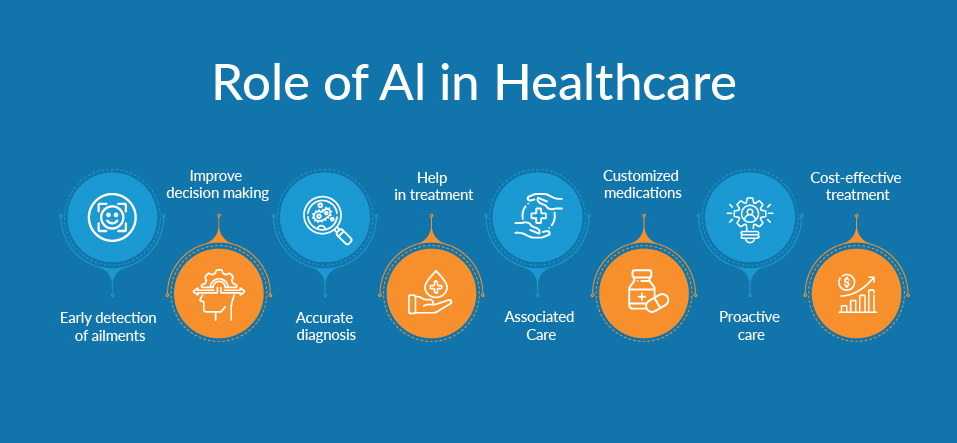
AI-powered advancements are transforming the way we approach healthcare, from predicting individual health risks to tailoring precise treatment plans. These innovations harness the power of AI to analyze vast datasets, enabling earlier disease detection, more accurate diagnostics through imaging analysis, and the development of targeted therapies.
This trend indicates a significant shift in healthcare delivery, providing customized treatments, and faster diagnostics. By harnessing data-driven insights, AI enables proactive care, ultimately enhancing patient outcomes and transforming healthcare delivery.
Looking ahead, research in AI healthcare aims to automate time-consuming tasks within the next 0-5 years, enhancing efficiency. Moreover, studies indicate that within the next decade, widespread adoption and utilization of artificial intelligence could make way for groundbreaking advancements, enabling the development of curative and customized treatments that were previously impossible.
The global AI in healthcare market was valued at USD 20.9 billion in 2024 and is projected to reach USD 148.4 billion by 2029, with a compound annual growth rate (CAGR) of 48.1% during the forecast period. This highlights the substantial opportunity available for businesses to capitalize on.
The integration of AI in healthcare in 2024 will significantly impact businesses by fostering innovation and streamlining operations. This trend will create new revenue opportunities through personalized and efficient AI-driven solutions. AI will automate many repetitive tasks, improving clinical workflows and processes. Leveraging health data, AI will identify patterns and insights for diagnostics, personalized medications, and treatments.
Moreover, AI aims to streamline routine tasks, enabling the healthcare industry to optimize resource allocation and achieve cost efficiency. This will improve patient experiences, reduce operational costs, and establish progressive companies as leaders in the evolving healthcare landscape.
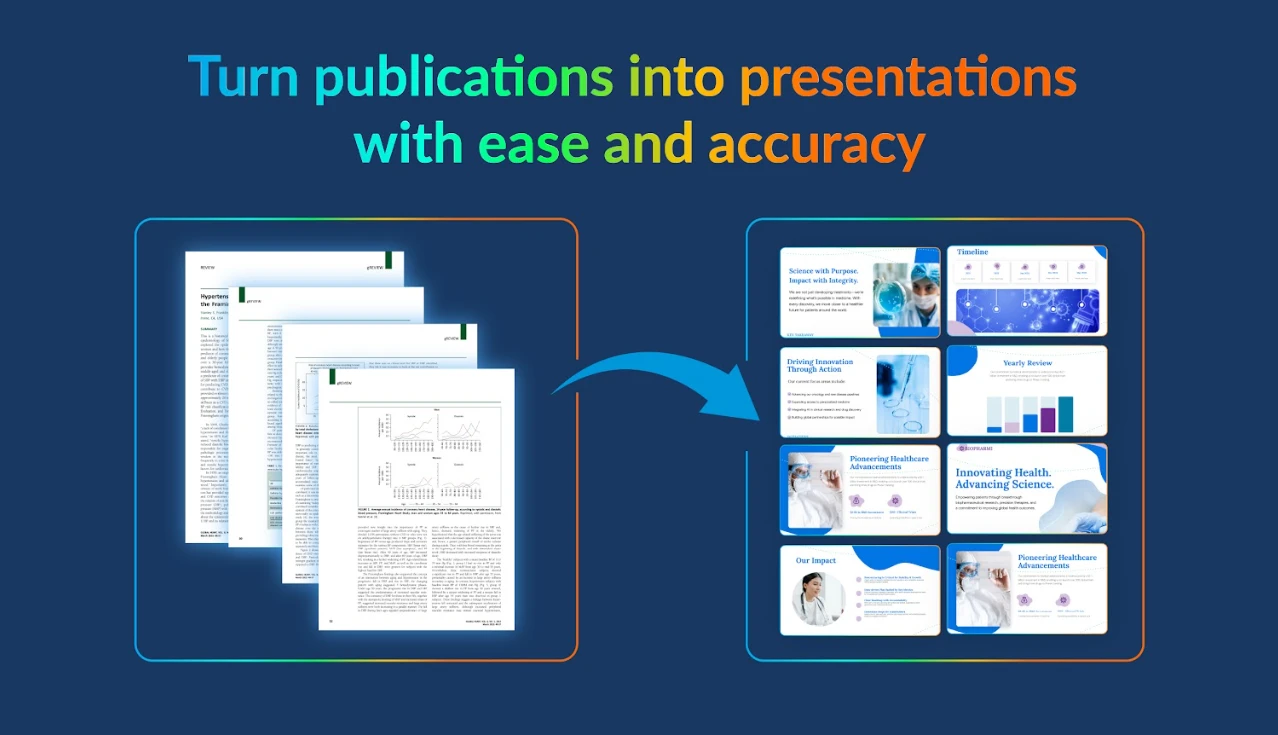
Among these AI platforms, 'Prezent,' recognized as the BioTech AI Solution of 2023, is contributing to a paradigm shift in the sector, especially in the communication of complex medical and scientific information. This shift is characterized by improved communication effectiveness, significant time savings, and cost reductions, thereby empowering better decision-making, and increasing productivity in the biotech field.
While AI has proven transformative across industries, many businesses face challenges in sustaining and scaling their AI efforts. To ensure ongoing success, organizations must address scalability risks such as productivity erosion, security, regulatory compliance, and ethical considerations.
Organizations need to focus on advancing engineering standards and enhancing data capabilities for storage, collaboration, and feature reuse. Additionally, ensuring adherence to data and machine learning (ML) best practices through clear, defined protocols will help streamline the scalability process.
In the rapidly evolving landscape of AI in healthcare, continuous exploration of novel AI applications, user-centric innovation, and a proactive approach to ethics are essential for sustained success and transformative impact.
With the integration of AI, healthcare delivery is becoming more efficient, accurate, and tailored to individual needs. The growing use of AI in healthcare presents significant opportunities for businesses to innovate, streamline operations, and establish themselves as leaders in the evolving landscape.
However, to ensure sustained success in the evolving AI landscape, organizations must address scalability risks and adhere to best practices in data management and ethics.
.png)